In a dramatic turn of events across the high-altitude regions of Sikkim on 23 February 2026, heavy snowfall left hundreds of travellers stranded, prompting swift rescue operations by the Indian Army and multiple agencies. The sudden weather change disrupted travel along key mountain routes and highlighted both the challenges of Himalayan tourism and the preparedness of emergency services.
Sudden Snowfall Strands Hundreds of Vehicles
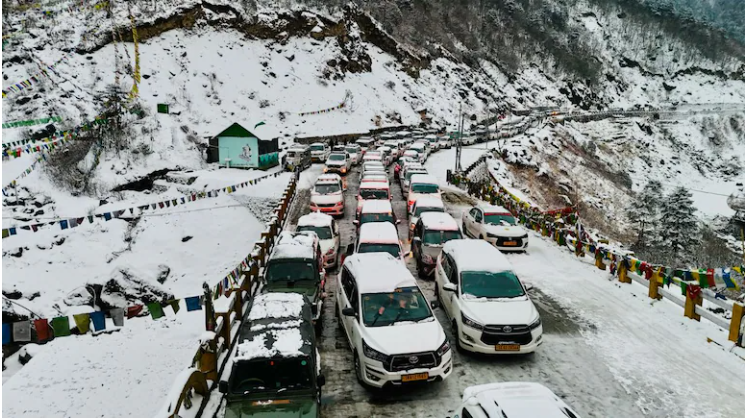
On Sunday morning, heavy snowfall hit the mountainous stretch between Sipsu and Tsangu (Changu Lake) along the Jawaharlal Nehru Road. The Sherathang region experienced intense snowfall beginning around late morning, quickly rendering the high-altitude roadway perilous and impassable. As a result, approximately 350 tourist vehicles became stranded in the snowbound terrain, with many passengers unable to move forward or return due to hazardous conditions.
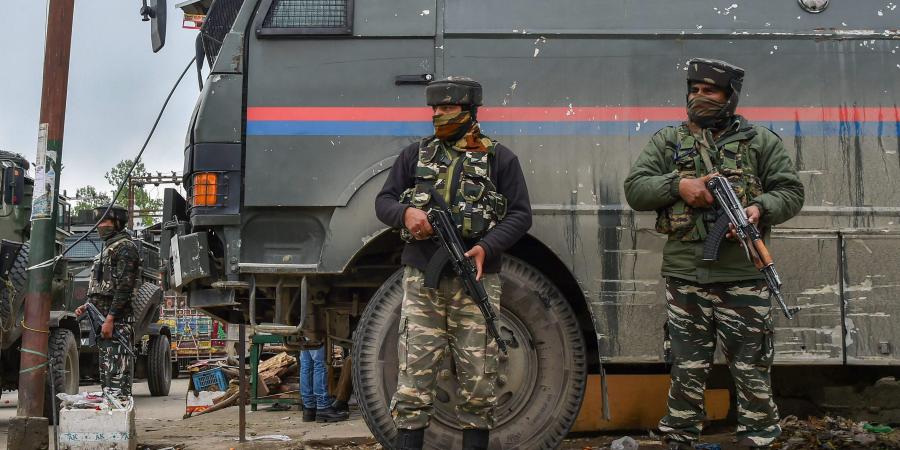
Authorities, including the police, Army, the General Reserve Engineer Force (GREF), and local volunteers, coordinated a large-scale effort to manage the situation. Vehicular movement was suspended on the affected stretch as a safety precaution, and rescue efforts were immediately initiated.
Army Evacuates Tourists to Safety
Amid these extreme weather conditions, the Indian Army successfully evacuated 46 tourists, including children, from the stranded crowd to the Army Transit Camp at 17th Mile. Here, tourists received temporary shelter, warmth, and care while teams continue to clear the roads and monitor weather conditions.
The coordinated rescue effort is ongoing, with priority given to ensuring the safety of those still in the snowbound region and planning for the eventual clearance of the remaining vehicles.
Weather Outlook and Challenges
The sudden onset of heavy snowfall was unexpected for many travellers during the travel season, underscoring the unpredictable nature of mountain weather. Such abrupt climatic changes are common in Sikkim’s high reaches and can occur even outside peak winter months.
In previous years, similar weather events have necessitated large-scale rescue missions. In 2023, for example, over 1,400 tourists were rescued from heavy snow conditions in Sikkim during another severe spell.
Importance of Preparedness in Himalayan Tourism
Sikkim’s scenic beauty and high-altitude landscapes attract thousands of visitors annually. However, these areas are also prone to sudden weather shifts, avalanches, landslides, and other natural hazards. The recent rescue mission highlights the importance of preparedness, timely response, and coordination between the Army, civil authorities, and local communities to protect tourists in challenging terrains.
As rescue and relief operations continue, authorities have urged visitors and tour operators to exercise caution and to stay updated on weather forecasts before planning travel in the Himalayan region.