
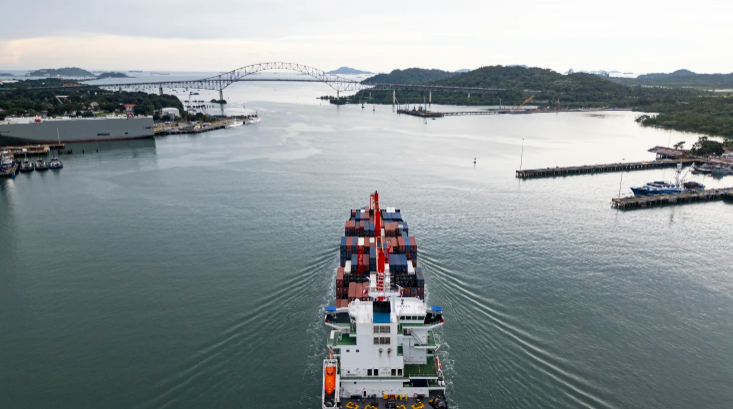
In a dramatic development that has sent ripples through global shipping and financial markets, the government of Panama has officially annulled long standing port concession contracts held by CK Hutchison. The decision affects two strategic terminals located at the Atlantic and Pacific entrances of the Panama Canal a waterway that remains one of the most vital arteries of global trade.
This move not only alters the operational structure of key canal ports but also raises broader questions about infrastructure sovereignty, international investment protections, and geopolitical influence in critical maritime corridors.
Background: The Strategic Importance of the Panama Canal Ports
The Panama Canal has been central to international trade since its opening in 1914. It connects the Atlantic and Pacific Oceans, significantly reducing shipping times and costs compared to navigating around South America’s Cape Horn.
Each year, thousands of vessels transit the canal, carrying:
- Energy shipments including liquefied natural gas and oil
- Agricultural commodities such as grain and soybeans
- Consumer goods moving between Asia, the Americas, and Europe
- Industrial equipment and automotive exports
The ports located at both entrances Balboa on the Pacific side and Cristóbal on the Atlantic play a crucial role in container handling, cargo redistribution, and logistical support for transiting vessels.
For decades, CK Hutchison’s subsidiary managed these terminals under concession agreements. However, Panama’s authorities determined that the contracts were legally flawed and subsequently voided them through a formal process.
What Prompted the Annulment?
Panama’s Supreme Court ruling declared the concession contracts unconstitutional. Following the ruling’s publication in the official gazette, the decision became legally binding and enforceable.
Government officials stated that the action was necessary to:
- Protect national sovereignty
- Ensure compliance with constitutional standards
- Preserve public interest in strategic infrastructure
The government also emphasized that this is not an outright expropriation but rather a legal restructuring of port governance. Nevertheless, the annulment effectively ends nearly three decades of private management under the previous concession structure.
Interim Control: Who Is Managing the Ports Now?
To prevent operational disruption, Panama moved quickly to establish interim control.
Global shipping linked operators have stepped in temporarily:
- Maersk, through its terminal division, is overseeing operations at one terminal.
- Mediterranean Shipping Company (MSC), through affiliated infrastructure entities, is managing the other.
These interim arrangements are expected to last up to 18 months while Panama prepares a new concession framework.
The government’s priority is clear: maintain uninterrupted port operations and ensure that global trade flows continue without delays or congestion.
Impact on Global Trade
The Panama Canal handles roughly 5–6% of global maritime trade. Even short-term instability at canal-adjacent ports can create logistical ripple effects.
1. Shipping Schedules and Freight Rates
If port operations slow or uncertainty grows, shipping lines may reroute vessels or adjust schedules. This can increase transit times and freight costs, particularly for time-sensitive goods.
2. Supply Chain Stability
Global supply chains are highly interconnected. Disruptions in one strategic node can affect inventory management across continents. Manufacturers relying on just in time delivery models are especially sensitive to such changes.
3. Insurance and Risk Premiums
Political and contractual uncertainty may increase risk assessments by insurers and financial institutions. Higher risk perceptions can translate into elevated shipping insurance costs.
For now, operations remain stable but markets are closely watching how the transition unfolds.
Legal and Financial Implications
CK Hutchison has strongly opposed the annulment and is reportedly considering legal remedies. The company may pursue arbitration under international investment agreements.
Potential outcomes include:
- Prolonged arbitration proceedings
- Compensation claims
- Diplomatic engagement between affected governments
- Financial market volatility related to infrastructure investments
For global investors, the case underscores the delicate balance between sovereign regulatory authority and contractual investment protections.
Infrastructure projects particularly ports, airports, and energy assets typically involve long term contracts spanning decades. Stability and predictability are central to attracting foreign capital. Any perception of sudden policy shifts can influence future investment decisions.
Geopolitical Dimensions
The situation cannot be viewed purely through a commercial lens. Strategic infrastructure, especially maritime chokepoints, carries geopolitical weight.
The Panama Canal is one of the world’s most critical trade corridors. Control over surrounding ports can influence:
- Trade security
- Regional political alignment
- Economic leverage
In recent years, global powers have paid closer attention to ownership and management of critical infrastructure assets. This dispute reflects a broader global trend where governments reassess foreign involvement in sensitive sectors.
Panama has insisted that its decision is rooted in constitutional law rather than geopolitical pressure. Still, analysts view the move within the broader framework of evolving international power dynamics.
The Road Ahead: New Concession Framework
Panama plans to open a new competitive bidding process for long-term concessions.
This presents both challenges and opportunities:
Opportunities:
- Redesigning revenue-sharing mechanisms
- Strengthening regulatory oversight
- Increasing transparency
- Enhancing environmental and operational standards
Challenges:
- Rebuilding investor confidence
- Resolving legal disputes efficiently
- Ensuring uninterrupted port efficiency
- Balancing sovereignty with global investment attractiveness
A well-structured bidding process could ultimately strengthen Panama’s control while maintaining its position as a global trade hub.
Economic Implications for Panama
The canal and its associated ports are major contributors to Panama’s GDP and government revenue.
The long-term success of this transition will affect:
- National revenue streams
- Employment within the port sector
- Panama’s international business reputation
- Future foreign direct investment
If managed effectively, Panama could emerge with a stronger governance model and enhanced fiscal returns. However, prolonged legal battles or operational instability could carry economic costs.
Conclusion: A Defining Moment for Canal Governance
The annulment of CK Hutchison’s contracts marks a defining moment in the governance of Panama Canal port infrastructure.
While immediate operations remain stable under interim management, the broader implications legal, financial, geopolitical, and economic are significant.
This development highlights a larger global conversation about sovereignty, infrastructure control, and the evolving relationship between governments and multinational corporations.
As Panama moves toward establishing a new concession framework, the world will be watching closely. The outcome could shape not only the future of canal port management but also international standards for infrastructure governance in strategic trade corridors.