
Region Affected: Northeastern United States (Maryland to Maine)
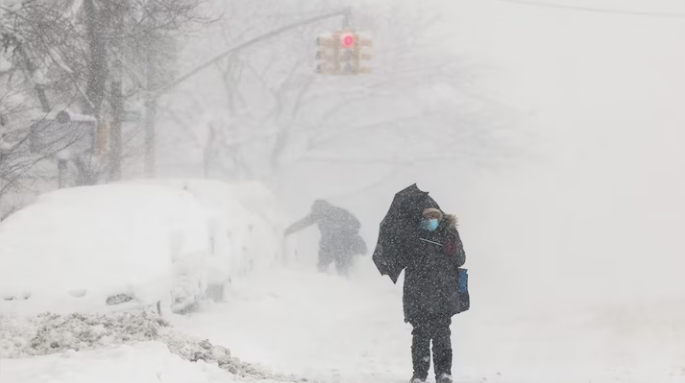
A historic and powerful winter storm, described by meteorologists as one of the strongest nor’easters in a decade, has slammed the Northeast United States, bringing life to a standstill. Major cities including New York City, Boston, and Philadelphia experienced severe disruption as heavy snowfall and strong winds impacted millions of residents.
What Happened?
On February 23, 2026, a massive snowstorm rapidly intensified, creating dangerous conditions across several states.
Key impacts include:
- Over 5,600 flights cancelled across major airports including New York JFK, LaGuardia, Newark, and Boston Logan.
- Schools closed across multiple states, including a full snow day in New York City.
- Blizzard warnings issued from Maryland through Maine due to heavy snow and powerful wind gusts.
The storm produced whiteout conditions in several regions, making road travel extremely dangerous and forcing authorities to implement travel restrictions in some areas.
Meteorological Impact: Bomb Cyclone and Nor’easter Conditions
Weather experts identified the system as a bomb cyclone, a phenomenon where atmospheric pressure drops rapidly, intensifying the storm’s strength. Combined with classic nor’easter conditions, the result was heavy snowfall and strong coastal winds.
Some areas recorded significant snow accumulation, with certain airports reporting snowfall levels exceeding 30 inches. Coastal regions experienced strong wind gusts that further worsened travel conditions and caused structural concerns in some locations.
Transport and Infrastructure Disruption
The snowstorm severely impacted transportation and essential services:
- Thousands of flights were grounded, affecting domestic and international travel plans.
- Public transit systems in major cities operated on limited schedules or were temporarily suspended.
- Power outages affected hundreds of thousands of residents as utility crews worked to restore electricity amid harsh weather conditions.
Emergency services remained active throughout the storm, urging residents to avoid unnecessary travel and remain indoors.
Human and Economic Impact
Beyond the immediate disruptions, the storm has had broader economic implications. Airlines faced operational losses due to cancellations, while businesses across affected states closed temporarily.
Residents experienced supply shortages in some areas as panic buying increased before the storm’s arrival. At the same time, many communities showed resilience, with neighbors assisting one another and local authorities coordinating emergency response efforts.
What Happens Next?
Meteorologists continue to monitor the situation, warning that additional weather systems could bring further snowfall in the coming days. Authorities advise residents to stay updated through official weather alerts and avoid travel unless absolutely necessary.
Conclusion
This powerful winter storm serves as a reminder of how extreme weather events can disrupt even the most developed infrastructure systems. With thousands of flights cancelled, schools shut, and cities temporarily halted, the storm will likely be remembered as one of the most significant winter events of the season.
As recovery operations continue, attention now turns to cleanup efforts, infrastructure repair, and restoring normalcy across the northeastern United States.