
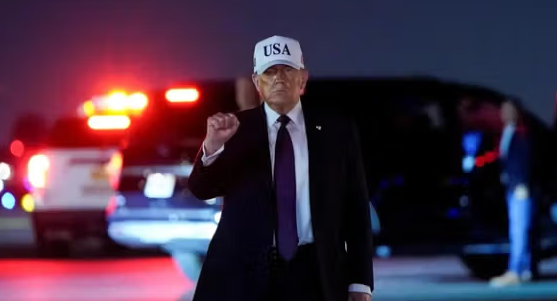
On the United States, in coordination with Israel, initiated what President Donald Trump described as major combat operations in Iran, marking a significant escalation in U.S.Middle East policy and military activity. This blog breaks down the key elements of Trump’s speech and what this development could mean globally and regionally.
Summary of Trump’s Speech
President Trump delivered an eight‑minute televised address following airstrikes and military action against Iran. In the speech, he confirmed that U.S. forces had begun “major combat operations” intended to eliminate perceived threats from the Iranian regime’s nuclear and missile programs.
According to Trump:
- Iran has resumed nuclear and long‑range missile development, posing threats to the U.S. and its allies.
- The U.S. military action targets Iran’s strategic weapons systems and military infrastructure.
- He explicitly warned Iranian forces to lay down arms or “face certain death.”
- Trump appealed directly to the Iranian people, urging them to “take over your government” once the military phase is over.
- He acknowledged that American casualties are possible or likely during these operations.
This marks one of the most forceful U.S. public justifications for military action against Iran in recent decades.
Why This Matters: Geopolitical and Security Implications
1. Escalation of Regional Conflict
The strikes followed weeks of stalled negotiations between Washington and Tehran over Iran’s nuclear ambitions. Trump’s announcement signals a dramatic shift from diplomacy to military intervention after diplomatic efforts failed.
By framing the U.S. action as a defense against a “terrorist regime” capable of threatening American interests, the message is positioned to justify future sustained military involvement. This risks widening the conflict beyond bilateral skirmishes into a prolonged regional security crisis.
2. Appeal to the Iranian Population
In a rare move, Trump directly addressed the Iranian populace, not just the leadership. He encouraged Iranian citizens to overthrow their government following the military campaign, describing the moment as a potential “chance for freedom.”
This strategy combines military pressure with calls for social uprising, which could have unpredictable social and political consequences inside Iran.
3. Acknowledgment of Potential U.S. Casualties
Trump’s speech did not shy away from the reality that American forces might incur losses. This blunt acknowledgment reflects the administration’s framing of the conflict as a long‑term struggle rather than a short engagement.
Such statements have implications for public perception, military morale, and political accountability back home.
Reactions and Immediate Consequences
International Response
Several nations and organizations have already expressed concern about the escalation. Iran’s foreign ministry warned of forceful retaliation and condemned the strikes as unjustified attacks on sovereign territory.
Meanwhile, other countries in the region are monitoring the situation closely, with some adjusting military readiness and evacuating non‑essential personnel from conflict zones.
Humanitarian and Civilian Impact
Reports indicate explosions and damage in cities such as Tehran, with civilian areas affected alongside military targets. This raises concerns about non‑combatant casualties and the broader humanitarian toll of the operations.
What Comes Next? A Strategic Shift
The U.S. and Israel’s military action, validated publicly by Trump’s speech, marks a turning point in Washington’s approach to Tehran. Former policies focused largely on sanctions and containment. The current stance appears to embrace direct military engagement, backed by rhetoric aimed at regime destabilization.
The long‑term effects of this policy could include:
- Wider regional conflict involving neighboring states
- Disruption of global energy markets
- Increased security threats to U.S. personnel abroad
- Domestic political polarization over foreign policy
Conclusion
President Trump’s February 28, 2026 speech announcing major U.S. combat operations in Iran represents a watershed moment in modern geopolitics. With a combination of military force, harsh rhetoric, and calls for regime change, this development carries deep implications for international security, regional stability, and the future of U.S.–Iran relations.
As events continue to unfold, the world watches closely to see whether diplomatic avenues might re‑emerge, or if this marks the start of a prolonged conflict with far‑reaching consequences.