
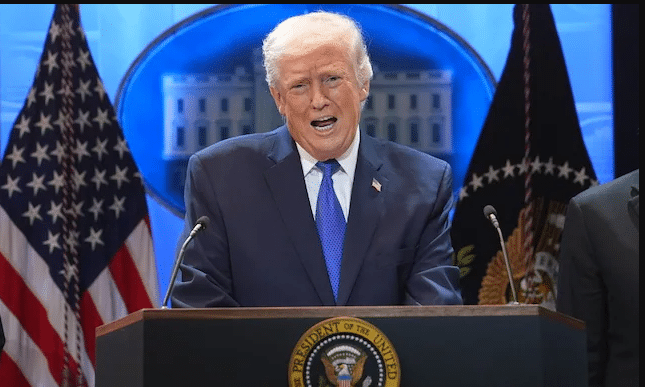
Washington, D.C.: US President Donald Trump has stirred controversy by declaring on social media that the entire airspace over Venezuela should be considered “closed.” The move has escalated tensions with Venezuelan President Nicolás Maduro and sparked concerns that the US may be preparing further military actions.
Trump’s Statement
In posts over the weekend, Trump wrote that the airspace “above and surrounding” Venezuela should be “closed in its entirety.” The White House has not clarified whether this represents an official policy or is primarily campaign messaging against Maduro.
Legal Limits: Can the US Close Another Country’s Airspace?
Under international law, each country has complete sovereignty over the airspace above its territory, meaning the US cannot legally shut down Venezuelan airspace. While airlines may interpret Trump’s statement as advice to avoid the region, it carries no formal legal authority outside US borders.
Impact on Airlines
US airlines have been banned from flying directly to Venezuela since 2019, though some still traverse Venezuelan airspace en route to other South American destinations. The FAA recently issued a warning advising pilots to exercise caution due to heightened military activity. US operators must provide the FAA 72 hours’ notice before entering Venezuelan airspace.
International airlines from Panama, Colombia, and Curaçao continue flying to Caracas, while several carriers—including Avianca, Gol, Iberia, Latam, TAP, and Turkish Airlines—have suspended services. Venezuela has threatened to revoke permits for airlines that do not resume flights.
Venezuela’s Response
Venezuela condemned Trump’s statement as a “colonial threat” and a violation of its sovereignty. Its foreign ministry labeled the declaration “hostile, unilateral, and arbitrary.” The government also imposed a 48-hour ultimatum on airlines to resume suspended services or risk losing their operating permits.
Historical Context
During Trump’s first administration in 2019, the US suspended all direct flights to and from Venezuela and restricted US operators from flying below 26,000 feet in Venezuelan airspace. While the US can regulate American airlines, it cannot control international carriers or dictate another country’s airspace.
US-Venezuela Tensions
The announcement comes amid escalating US pressure on Maduro, including covert CIA operations and military strikes on suspected drug-smuggling vessels in the Caribbean that have reportedly killed over 80 people since September. The US does not recognize Maduro as Venezuela’s legitimate leader, and he faces charges of narcoterrorism in the US.
President Trump has hinted that land strikes “could start very soon,” though he has cautioned against reading too much into his airspace comments.
Senate Democrat leader Chuck Schumer criticized the move, saying:
“President Trump’s reckless actions towards Venezuela are pushing America closer and closer to another costly foreign war. Under our Constitution, Congress has the sole power to declare war — not the President.”
Military Build-Up
US forces have conducted bomber flights near Venezuela, and the aircraft carrier USS Gerald R. Ford has been deployed to the region, leading what is described as the largest US military presence there in decades. The operation, dubbed “Operation Southern Spear”, includes nearly a dozen Navy ships and around 12,000 personnel.