
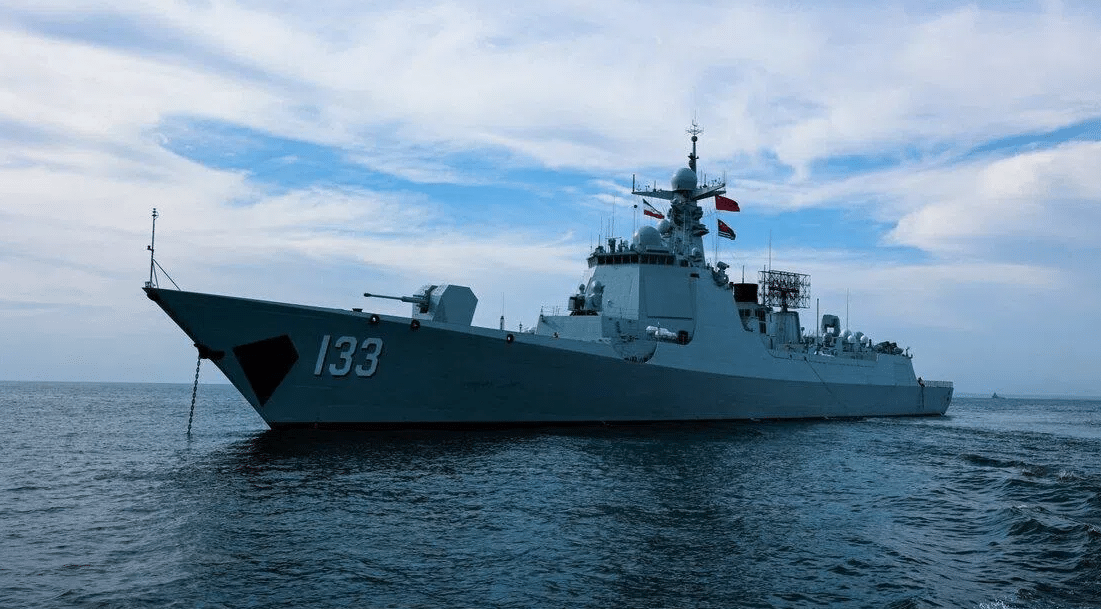
China has deployed a naval task group into the Western Pacific to conduct combat drills, signaling a fresh escalation in regional military activity. The move comes at a time of increasing geopolitical tension involving Japan, the United States, and their regional allies.
The deployment includes advanced naval assets such as guided-missile destroyers, highlighting China’s growing ability to project power beyond its immediate coastal waters.
What Triggered the Deployment
The drills are widely seen as a response to expanding military cooperation among the United States, Japan, and the Philippines.
- Japan has recently joined large-scale joint military exercises with US allies
- Regional alliances are strengthening to counter China’s influence
- The Indo-Pacific has become a key geopolitical flashpoint
This evolving security environment has prompted China to demonstrate its naval readiness and strategic reach.
Strategic Significance of the Western Pacific
The Western Pacific is a critical region for global trade and military positioning.
- It includes vital sea lanes for international commerce
- It is central to US-China strategic rivalry
- It acts as a buffer zone around Taiwan and nearby territories
By conducting drills in this region, China is signaling its intent to operate beyond the so-called “first island chain” and assert broader maritime influence.
Military Capabilities on Display
The Chinese navy deployed a task group led by a modern Type 052D destroyer, a key component of its expanding blue-water navy.
These ships are equipped with:
- Advanced radar and missile systems
- Anti-air and anti-ship capabilities
- Long-range operational capacity
Such deployments demonstrate China’s increasing ability to conduct sustained operations in distant waters.
Rising Tensions in the Indo-Pacific
The drills come amid a broader pattern of military activity in the region:
- Increased US naval presence
- Joint exercises involving Japan, Australia, and the Philippines
- Ongoing tensions surrounding Taiwan
This has led to a gradual militarization of the Indo-Pacific, raising concerns about potential miscalculations or conflict escalation.
Global and Market Implications
While primarily military in nature, such developments can have wider economic and financial consequences:
- Increased geopolitical risk may impact global markets
- Shipping routes could face disruptions in extreme scenarios
- Defence stocks may see heightened investor interest
- Safe-haven assets like gold and the US dollar may strengthen
Expert Outlook
Analysts view the deployment as part of a long-term strategy rather than an immediate prelude to conflict.
- China is expanding its naval reach systematically
- Regional alliances are strengthening in response
- Strategic competition is likely to intensify over time
The situation reflects a broader shift toward a multipolar global security environment.
Final Thoughts
China’s latest warship deployment in the Western Pacific highlights the growing strategic competition in the Indo-Pacific region.
While the drills are not unusual in isolation, their timing and location underscore rising tensions with regional powers, particularly Japan and US allies.
As geopolitical risks continue to rise globally, developments in this region will remain critical for both policymakers and investors to monitor.