
Introduction
Japan is currently witnessing a surge in political tension as debates over constitutional reform intensify. The issue centers around the country’s post-war pacifist constitution, particularly Article 9, which restricts military actions. Recent developments have triggered widespread public protests and sparked a nationwide discussion about Japan’s future security policy.
Background: What Is Article 9?
Japan’s constitution, enacted in 1947 after World War II, includes Article 9, which renounces war and prohibits maintaining traditional military forces. This clause has been central to Japan’s identity as a pacifist nation for decades.
However, changing global security dynamics especially rising tensions involving China and North Korea have prompted calls for reform.
Government Push for Constitutional Revision
Prime Minister Sanae Takaichi has emphasized the need to modernize the constitution to address current geopolitical threats. The government argues that the existing framework limits Japan’s ability to respond effectively to regional security challenges.
Supporters of reform believe:
- Japan needs stronger defense capabilities
- The constitution should reflect modern realities
- Legal clarity is needed for Self-Defense Forces operations
Public Reaction: Large-Scale Protests Emerge
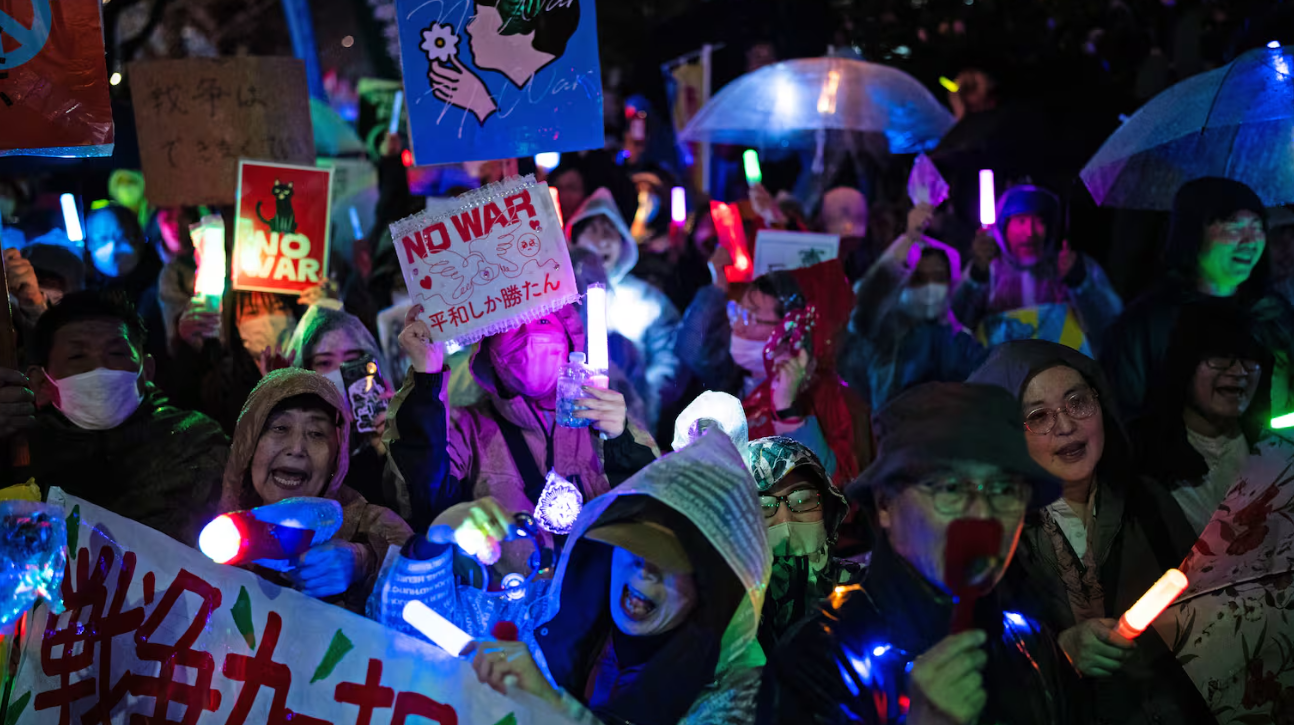
The push for constitutional changes has not been universally accepted. Thousands of citizens have taken to the streets to protest against any revision.
Reports indicate that tens of thousands of demonstrators gathered across Japan, especially on Constitution Memorial Day, highlighting strong public concern over potential militarization.
Protesters argue that:
- Article 9 has preserved peace for decades
- Revisions could lead to increased military involvement
- Government priorities should focus on social welfare instead of defense expansion
Divided Public Opinion
Public opinion in Japan remains deeply divided:
- Some surveys show majority support for limited revisions
- Others indicate significant resistance to major constitutional changes
This split reflects a broader ideological divide between security concerns and pacifist values.
Political and Legal Challenges
Amending Japan’s constitution is a complex process:
- Two-thirds approval in both houses of parliament
- Majority support in a national referendum
Despite the ruling party’s strong position after the 2026 Japanese general election, achieving public consensus remains a significant hurdle.
Global Implications
Japan’s constitutional debate is being closely watched internationally. Any change could:
- Strengthen Japan’s military alliances
- Impact Indo-Pacific security dynamics
- Influence relations with neighboring countries
The debate also reflects broader global shifts where nations are reassessing defense policies amid rising geopolitical tensions.
Analysis: Why This Matters
This issue goes beyond domestic politics. It represents a critical turning point in Japan’s post-war identity.
Key factors to watch:
- Public referendum outcomes
- Regional security developments
- Government’s ability to build consensus
Japan now stands at a crossroads between maintaining its pacifist legacy and adapting to evolving global threats.
Conclusion
The constitutional reform debate in Japan highlights a complex balance between peace and security. While the government pushes for modernization, strong public resistance underscores the deep-rooted value of pacifism in Japanese society.
The coming months will be crucial in determining whether Japan chooses continuity or change in its national defense policy.