Introduction
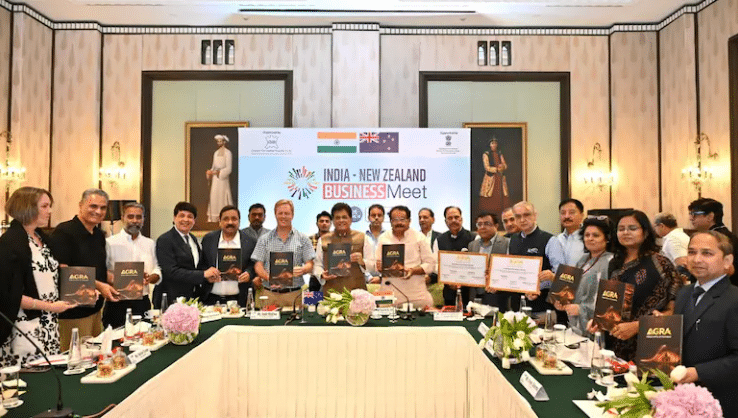
India has taken another major step in expanding its global trade network by signing a historic Free Trade Agreement (FTA) with New Zealand. Described as a “once-in-a-generation” deal by Piyush Goyal, this agreement is expected to significantly boost trade, strengthen bilateral ties, and open new opportunities for businesses in both countries.
Moreover, this deal reflects India’s growing focus on building strong economic partnerships across the Indo-Pacific region.
What Is the India–New Zealand Free Trade Agreement?
The India–New Zealand Free Trade Agreement is a comprehensive economic pact designed to reduce trade barriers, promote exports, and encourage investments.
In addition, both countries aim to double their bilateral trade to nearly $5 billion over the next few years, making this agreement highly significant for long-term economic growth.
Key Highlights of the Agreement
1. Reduced Tariffs and Better Market Access
One of the biggest advantages of this agreement is the reduction of tariffs on several goods. As a result:
- New Zealand exports like wool, wood, fruits, and wine will become more accessible in India
- Indian products will enjoy lower or zero-duty access in New Zealand markets
Consequently, exporters from both nations will benefit from improved competitiveness and easier market entry.
2. Protection for Domestic Industries
However, India has carefully protected its sensitive sectors. For instance, products such as:
- Dairy
- Sugar
- Edible oils
- Certain agricultural goods
have been excluded from tariff reductions. Therefore, local farmers and small industries will not face sudden competitive pressure.
3. Boost to Trade and Investment
Furthermore, the agreement is expected to:
- Increase foreign investment
- Strengthen supply chains
- Encourage business collaborations
In the long run, this could create new job opportunities and drive economic growth in multiple sectors.
Why This Agreement Is Important
This FTA is not just about trade it is also about strategy.
Firstly, it helps India expand into a high-value developed market.
Secondly, it strengthens India’s presence in the Indo-Pacific region.
Finally, it reduces dependence on limited trade partners by diversifying economic relationships.
As a result, India’s global trade position is expected to improve significantly.
Sectors That Will Benefit the Most
Several industries are likely to gain from this agreement. For example:
- Textiles: Easier exports to a premium market
- Pharmaceuticals: Increased demand for Indian medicines
- Agriculture: Better export opportunities for selected products
- IT and Services: Growth in professional and digital services
Thus, the agreement creates a wide range of opportunities across industries.
Challenges and Concerns
Despite the benefits, there are some challenges to consider.
For instance, businesses must adapt to new regulations and trade policies. Additionally, there may be concerns about increased imports in certain sectors.
Nevertheless, government safeguards and phased implementation are expected to minimize risks.
Conclusion
In conclusion, the India–New Zealand Free Trade Agreement 2026 marks a major milestone in international trade relations. Not only does it enhance economic cooperation, but it also creates long-term opportunities for growth and innovation.
As highlighted by Piyush Goyal, this deal truly represents a “once-in-a-generation” opportunity that could reshape trade dynamics for years to come.